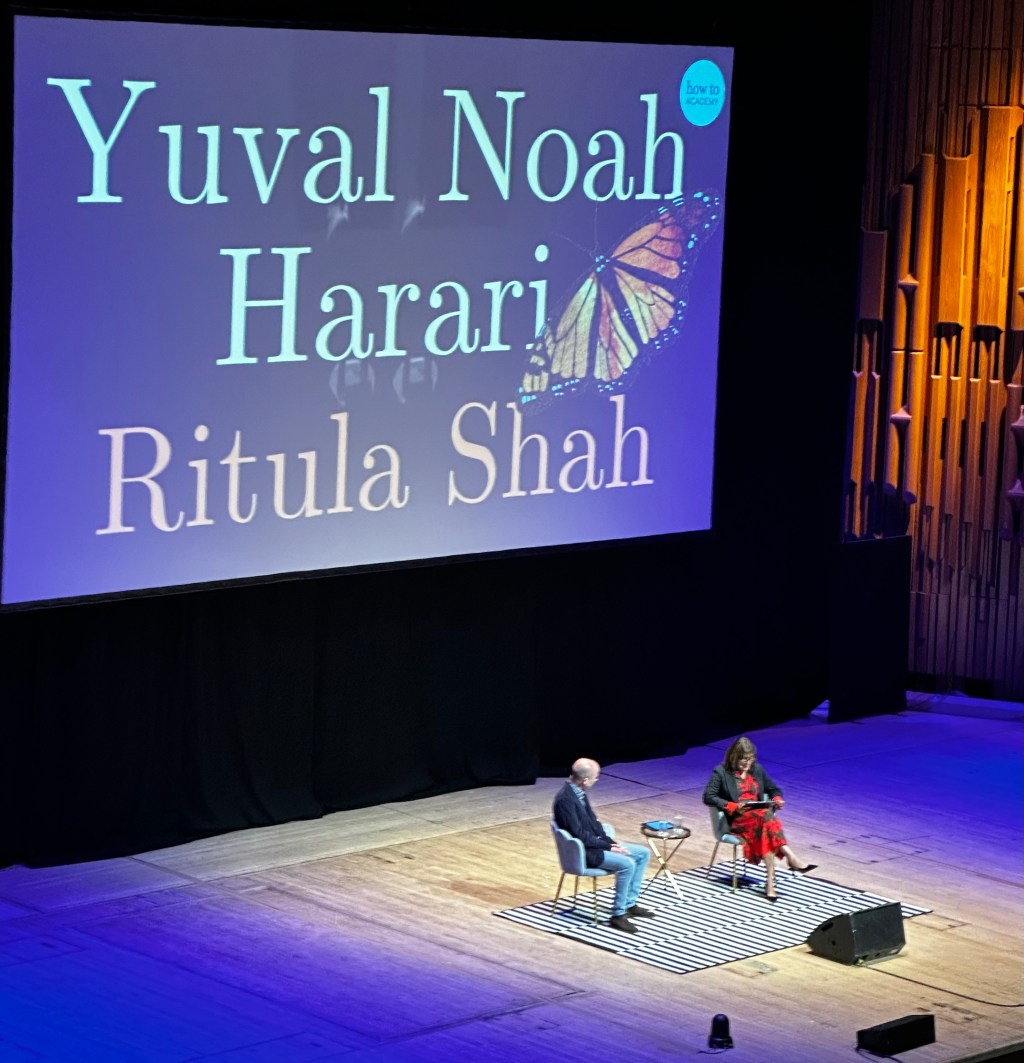
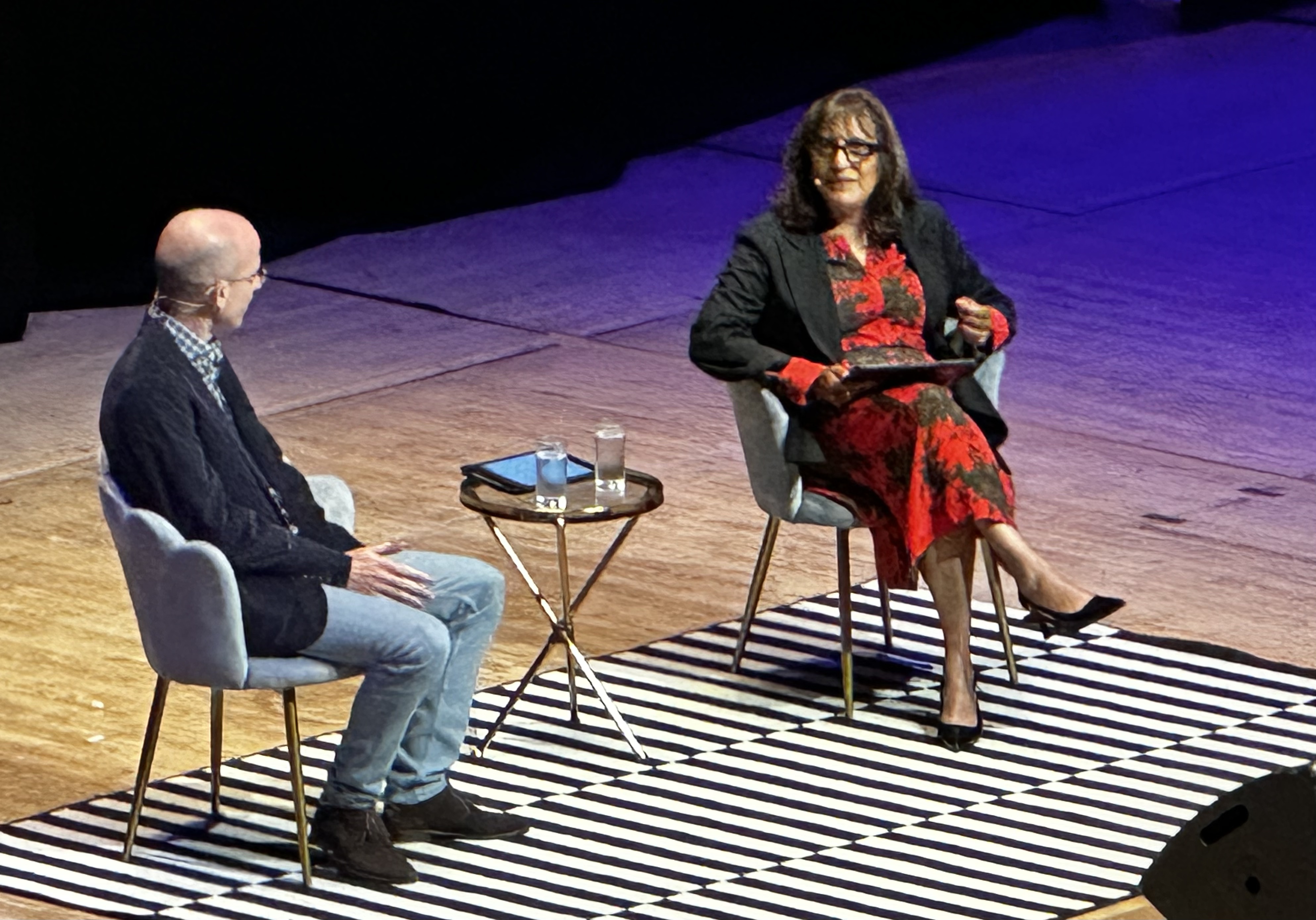
Last night, I had the privilege of hearing Professor Yuval Noah Harari speak at a riveting event that tackled one of the most urgent questions of our time: how do we navigate a world in crisis? Harari is one of the most influential thinkers alive today, and just as in his best selling books: Sapiens, Homo Deus and Nexus, his insights were enlightened, resonant and thought provoking to say the least. Read on to find out more.
An Age of Crises
Harari painted a picture of our current world struggling with multiple, overlapping crises. Despite possessing the most advanced communication systems in human history, he argued, humanity is struggling to actually talk to each other. Social media, traditional media, and AI algorithms increasingly mediate our conversations by exploiting emotional triggers like fear and outrage to keep us engaged. In the battle for attention, bots and algorithms amplify our weaknesses, leaving society more polarized and mistrustful than ever.
This crisis of communication impacts democracy itself because, according to Harari, democracy is essentially a conversation. When mass communication is extended or reshaped via new technology (e.g. printing press, radio, or the internet), democracy is shaken, but it has always adapted. The question now is whether it can withstand algorithm-driven communication that thrives on division.
The AI Dilemma
One of the most striking parts of Harari’s talk concerned artificial intelligence. He asked: should AI be granted legal personhood? In the U.S., incorporation laws could make that possible. But if AI systems gain wealth and influence, what would stop them from manipulating politics to their advantage? The idea sounds like science fiction, but Harari made clear that it’s a very real question societies will need to face soon.
He also raised a haunting thought in response to a question: what happens to humanity if AI makes language obsolete? Language was our superpower; the tool that allowed humans to dominate the planet. But AI is already proving to be faster, sharper, and more comprehensive at using it. Text-based religions, political manifestos, even literature could all be reframed, reinterpreted, and redistributed by AI in ways no human scholar could match. Harari suggested, with all seriousness, that his next book might well be his last given the pace of AI progress.
Staying Human
Thankfully, Harari did not leave us in despair. He stressed that to survive this storm, humanity must remain rooted in its biological nature. We are, at our core, organisms with rhythms and needs—weekends, seasons, cycles of rest and renewal. To allow inorganic systems to dominate our lives is to lose touch with what makes us human. His advice, and one which I strongly advocate, was simple yet profound: be kind to yourself, and be kind to each other.
In a world of collapsing conversations, manipulated emotions, and rising distrust, kindness and trust are not luxuries, they are survival strategies. Humanity has always been resilient, Harari reminded us, and that resilience remains our best hope.
As I left the event, I couldn’t shake the thought: if democracy is a conversation, then perhaps our greatest act of resistance in this age of algorithms is to truly talk—and listen—to one another again.
 Judeumeh's Blog
Leave a comment